CONTAINER

Director Lukas Moodysson    Cast Jena Malone, Peter Lorentzon, Mariha Aberg

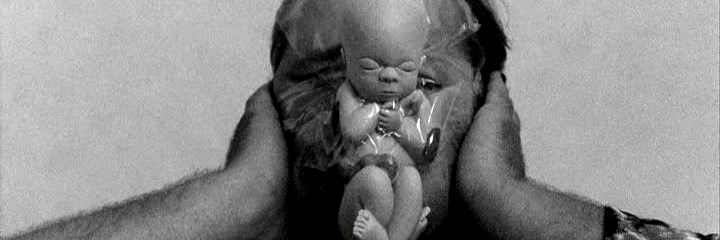
More the sort of experimental film you’d expect to find projected in an art gallery, Moodysson’s latest is his strangest yet. A 90 minute monchrome montage, during which time we see an overweight man sitting around in his pants, or licking things, or cellotaping a plastic fetus to his head. Occasionally a beautiful woman will appear and lounge around. Sometimes she licks things, too. All the while, Jena Malone delivers what we take to be the interior monologue of the man, an autistic “girl in a boy’s body” who monotonously lists his hobbies as “celebrities, collecting things, dead porn stars, the Second World War, nuclear disasters…” Funny, nightmarish and beautiful, it’s a film so powerful that you emerge blinking into the light wondering if somebody hasn’t sprinkled special mushrooms in your popcorn.

First published in Hotdog Magazine in 2006.

INTERVIEW: KEN LOACH ON ‘THE WIND THAT SHAKES THE BARLEY’

“Churchill, Lloyd George, Birkenhead…” growls Ken Loach. “It’s always good to throw a snowball at those bloody imperialists.”

The public perception of Ken Loach is that he’s spiky, probably dour, most definitely from The North and unashamedly leftwing. Only the last of these is true. In reality, he’s affable, self-deprecating, witty, and was born in Nuneaton (which is in the Midlands – we looked it up).

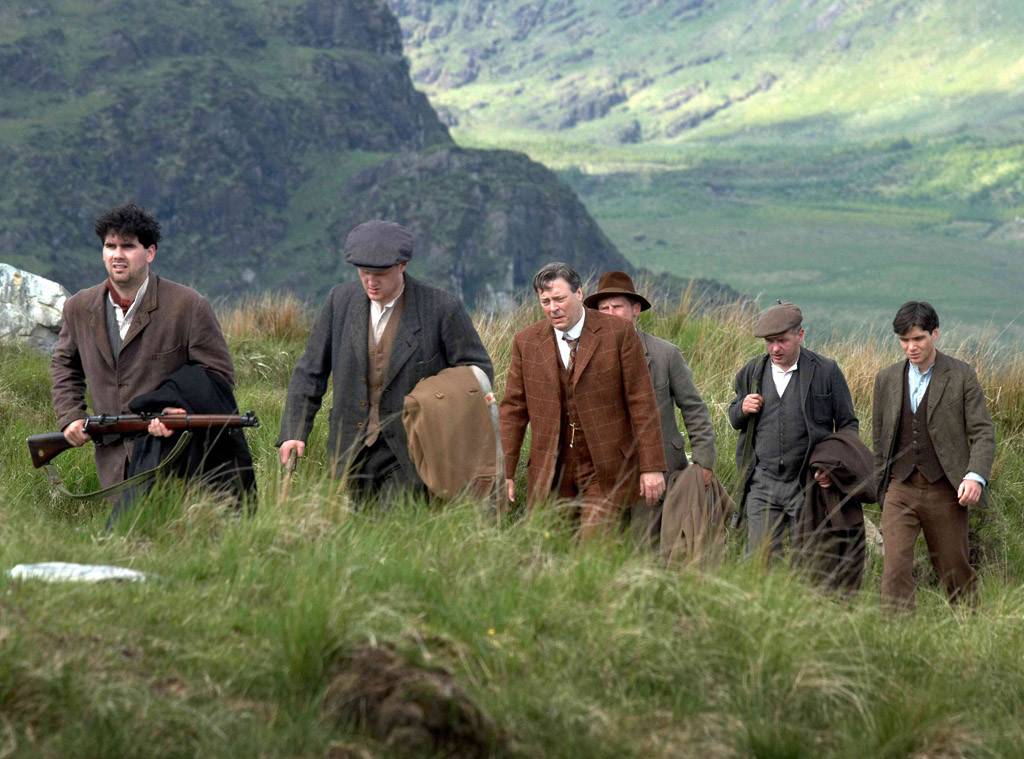
Loach’s reputation stems from his work. Having cut his teeth in theatre and BBC television, he first came to public notice for Cathy Come Home in 1966, a TV play about homelessness so powerful that it directly resulted British law being rewritten. Firmly rooted in reality, politically radical and emotionally moving, it formed the template for his career. His latest, The Wind That Shakes The Barley, tells the story of two brothers who join the IRA and fight together during the Irish War of Independence of 1920-1922, only to take different sides in the ensuing Civil War.

“I think what happened in Ireland is one of those stories of permanent interest,” he says. “Like the Spanish Civil War [the subject of his 1995 film, Land And Freedom], it was a pivotal moment. It reveals how the struggle for independence was thwarted at the moment of its success by a colonial power.”

No, Loach really isn’t a fan of the British Empire. He famously refused an OBE in the 1970s, saying, “It’s not a club you want to join. It’s all the things I think are despicable: patronage, deferring to the monarchy and the name of the British Empire, which is a monument of exploitation and conquest.”

Considering his views, it’s unsurprising that the film’s central protagonist is a highly principled, unbending socialist, played by rising star Cillian Murphy. For Loach’s detractors, this is another example of his politically biased filmmaking. Loach is unapologetic.

“The IRA was a volunteer army. You read the stories that existed at the time, and people were incredibly principled. Your starting point for telling a story is trying to find a group of characters who contain contradictions that unravel. In the unravelling you say everything about the situation that you want to say.”

The story was also dictated by budget. Because Loach and his team didn’t have the cash to reconstruct the war’s bigger clashes, they chose to focus on the guerrilla warfare of the IRA’s Flying Columns.

“They were men who did their ordinary job during the day and then got up every now and then to carry out an action,” Loach explains. “That was appealing, to have a group of farm labourers who kick out the world’s most powerful country.”

But Loach, despite what his critics might say, wasn’t interested in presenting freedom fighters united in solidarity.

“It wasn’t like that,” he says. “It’s a pattern you see time and again – how different interests unite to face a common oppressor and then, ultimately, how those contradictions inevitably work their way out.”

In Ireland, the defining, dividing moment, was the treaty of 1922 which gave Ireland partial independence and, of course, left the North as part of the UK.

“People who seemed the most straightforward backed the treaty. I mean, Michael Collins was a perfect case – you couldn’t have a stronger fighter for independence but when it came down to it he was all for taking the treaty, probably for some good reasons.”

Loach is in no doubt who was responsible for Ireland’s civil war:

“Churchill, Lloyd George, Birkenhead. When it wasn’t in their best interests to keep denying independence, they sought to divide the country by giving support to those in the independence movement who were prepared to allow economic power to stay in the same hands.”

With such an inflammatory message at its heart, not to mention a sympathetic attitude towards the IRA, Loach is bracing himself for an outraged barrage from the rightwing press, as endured by Jim Sheridan’s In The Name Of The Father and Neil Jordan’s Michael Collins.

“I’m expecting some hostility,” he admits, cheerfully. “The War on Terror is the current cliché and this is a film about people who, at the time, were considered terrorists.” He laughs, adding cheekily, “That just might be contentious.”

This interview first appeared in Hotdog Magazine in 2006.

EIGHT BELOW

Director Frank Marshall
Cast Paul Walker, Bruce Greenwood, Moon Bloodgood, Jason Biggs, Gerard Plunkett

This child-oriented film is Paul Walker’s best movie by miles, although he’s still upstaged by a team of huskies. “Inspired by a true story”, it centres around Jerry (Walker), a guide at an Antarctic base who lives for his sledge-pulling mutts. After a disastrous expedition with a meteor-hunting scientist (Plunkett) lands him in hospital, Jerry wakes to learn that, because of a storm, the base has been evacuated and his beloved dogs abandoned.

The first half of the movie, Jerry and the doc’s trek, is genuinely thrilling. When the narrative shifts to Jerry’s moping, inter-cut with the huskies’ fight for survival, it exchanges grittiness for schmaltz, relying on increasingly cute and anthropomorphic doggies.

That said, for a Disney movie, it’s surprisingly brutal. Not all the dogs make it out alive and there’s one shock moment, involving a leopard seal and a killer whale carcass, that will have kids and adults jumping out of their seats.

This review first appeared in Hotdog Magazine in 2006.

SHERICA

Sherica was first performed at the 24/7 Theatre Festival in Manchester on 21st July 2011. It was directed by Trevor MacFarlane and starred Ruth Middleton as Katie, Oli Devoti as Michael, David Slack as Mr Pope, Katy Slater as Holly, Will Hutchby as Douglas and Nicola Stebbings as Natalie.

REVIEWS

★★★★ “Powerful and challenging”

– Dave Cunningham in What’s On Stage. For full review click here

★★★★ “Great drama… not to be missed”

– Ruth Lovett in The Public Reviews.

WEDNESDAY

‘Ooh, shit, time for Corrie. You’ve got to make time for Corrie haven’t you? You get yourself some sleep, Rose. While you’ve got the chance, like.’

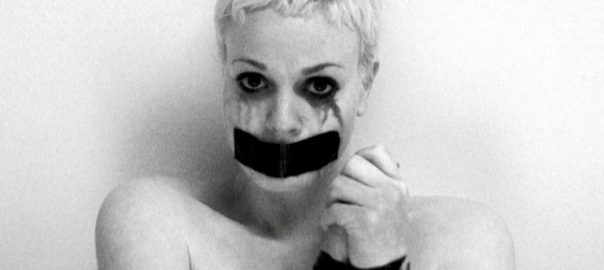
Kidnap, cable-ties, curry and Corrie. Rose wakes blindfolded, gagged and tied to a bed — this is not a good thing. A coruscating journey into one woman’s nightmare that asks the question: can those children who commit the worst crimes imaginable ever be rehabilitated? Or forgiven?

Contains violence, sexual content and adult content.

Wednesday was first performed at The Kings Arms, Salford on July 14th 2009. It was directed by Trevor MacFarlane and starred Ruth Middleton as Rose, Simon Bates as Curtis and Jimmy Boyland as Daniel.

REVIEWS

★★★★★ “The overwhelming darkness of it all might be too much for some – presenting itself as the grottiest possible form of redemption narrative, it packs a savage sting in its tail – but for those desensitised or open-minded enough to seek a point and structure amid all the squalor and atrocity, this is a stunning piece of abrasive, confrontational theatre, acted to perfection by its three-strong cast.”

– Richard O’Brien, Broadway Baby. For full review click here

★★★★ “Alarming but amusing… remarkably well written.”

–Manchester Evening News

★★★★ “A brilliant production.”

– Tychy, Fringe Review. For full review click here

Tychy@ the Fringe: Wednesday.

INTERVIEW: PAUL PROVENZA ON ‘THE ARISTOCRATS’

By Ian Winterton
First published in CityLife magazine in 2005

There’s a T-shirt, popular with scientists I’m told, that bears on its front the legend: “Memes don’t work”, while the reverse reads, “Tell a friend.” I think this is a great joke (because it makes me feel clever), which not only shows exactly how subjective comedy is, but how jokes work mimetically. For instance: did you ever hear the one about the man who went into a theatre agent’s office and said, “I’ve got a great act”? No? Well, now you have.

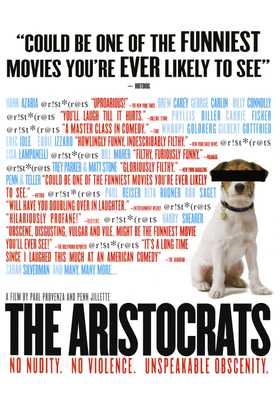
The joke, known as The Aristocrats, is the subject of an astounding new documentary by comedians Penn Jillette (the larger half of magicians Penn & Teller) and Paul Provenza, whom I meet for morning coffee in the Sheraton hotel during the Edinburgh International Film Festival. He’s a good-looking, square-jawed Italian-American, wearing a bright blue T-shirt that, while not sporting a dubious gag about memes, does show several photos of John Cleese performing his famous ‘silly walk’.

“We can trace it back at least as far as the mid to late nineteenth century,” he says in his confident, New York accent. “Jay Marshall, the older gentleman who first tells the joke in the film, he just died about two months ago at the age of 84. He first heard the joke when he was seven years old, by a guy who was in his eighties.”

Provenza finds it hilarious that “they think the perfect time to tell a child this joke is when they’re seven”. The joke is, you see, one of the filthiest ever told.

“We chose it because it’s got a set-up and a punchline and in between there’s a wide-open field,” says Provenza. “There’s no actual record of what that middle part is, but it usually contains sex, incest, scatology, bestiality. But it’s all subjective. In some parts of the world the joke would be about a guy eating pork.”

Needless to say, the pork joke doesn’t make it into Provenza’s movie. It’s outrageously foul and, therefore, one of the funniest movies ever made. But, in setting out to make the film, Provenza and Jillette’s intentions were serious.

“When Penn and I get together we talk very pretentiously about art, philosophy, politics, pussy – whatever it is, we’d talk pretentiously about it,” Provenza explains. “Penn was obsessing about jazz improvisation – what is genuine improvisation and what is just a sort of twisted recapitulation of something you’ve already heard? I said, ‘You know you’re talking about comedy?’ and then we started talking about the similarities between jazz and comedy.”

This line of thinking inspired the duo to investigate what it was that made comedians uniquely funny. They chose the Aristocrats.

“Not because it was transgressive,” Provenza insists, “but because it was simple. If you wanted to do the same with jazz musicians, you wouldn’t have them all perform Mozart, you’d have them do Mary Had A Little Lamb. And, with the Aristocrats, so many comedians already knew it so we didn’t have to explain anything. Everybody was on the same page right away.”

The film contains a roll-call of American comedians – Robin Williams, Whoopi Goldberg, Richard Lewis, Drew Carey, Jason Alexander – with British contributions from Eric Idle, Eddie Izzard and Billy Connolly. There’s even a South Park segment. Baring a few exceptions, they all live up to movie’s tag: “No nudity. No violence. Unspeakable obscenity.”

“We had to put that on,” says Provenza, “because, in the States, we have this thing that everything public has to be clean. Every journalist in the US asks us about the language, whereas in the UK, no-one could give a shit.”

At the time of our interview, Provenza hasn’t had much feedback from the British public (its UK premiere, later that evening, goes supremely well), nor indeed from our comics. This being the Edinburgh Festival, I tell him that I found myself having a pint with Stewart Lee the previous day who, it turned out, caught The Aristocrats while in the US. He looked at me very seriously and said, “That film is great. It totally made me reappraise my attitude to comedy. In fact, if I hadn’t seen The Aristocrats, I wouldn’t have written the act I’m performing this year.”

Provenza is delighted to hear this.

“I’m taken aback,” he exclaims. “That’s the hugest compliment I could ever get. I’m really, really, really in a good mood now. Stewart is phenomenal. One of the best stand-ups around. He makes me weep, he’s so funny.”

Later on, at Provenza’s invitation, I’m sitting in an audience comprised entirely by comedians who are in Edinburgh for the festival. As well as Lee, faces I spy include Jimmy Carr, Stephen Merchant, Barry Cryer, Andy Zaltzman, Lucy Porter, Brendon Burns, Dara O’Briain and Andy Parsons. When Provenza introduces the film, the warmth of the reception is palpable – he is clearly a well-loved figure. The film goes down incredibly well. Having seen it before, I get to watch the audience reacting, a pleasure equal to viewing the film for the first time.

“That’s why you’ve got to see this film in a theatre,” Provenza had told me before. “Half the fun is that the laughs aren’t all universal, and neither are the points at which some people walk out in disgust.”

No-one walks out during the comedians’ screening. It seems, as had happened in the States, comics have embraced the film.

“If comedians didn’t get it,” says Provenza, “that would mean we’ve got it really wrong. But they love it, not just because it’s funny, but because you get a real sense of camaraderie. Even though we shot 100 people in 100 different locations, there really is a sense that they’re in the same room. It’s got that sense of community that nobody has really captured before.”

And, importantly, it acknowledges stand-up as an artform.

“Yes,” agrees Provenza. “Everybody thinks they can do comedy just because they can make your friends laugh. They think they have what it takes but maybe they’re not up on stage. If Tchaikovsky’s up there on the piano, you wouldn’t think you were as talented as him just because you can play chopsticks. Comedy never gets the respect as an artform.”

The Aristocrats may change that. Or it may not. Either way, its barrage of “unspeakable obscenity” is stomach-crampingly funny. It really is. So spread the word. Tell a friend.

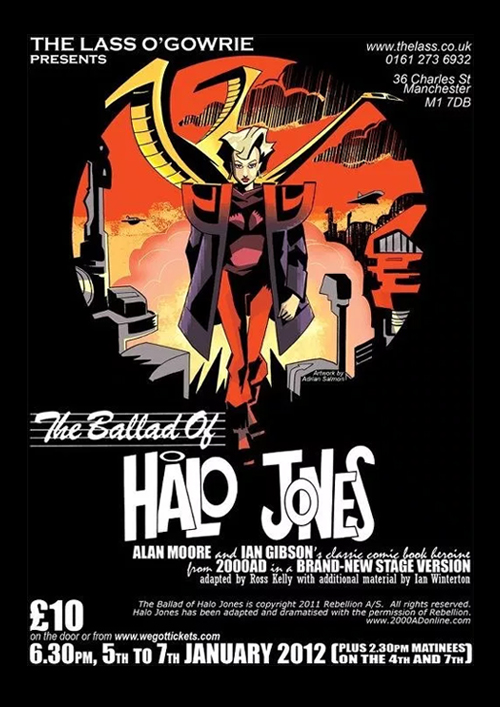
THE BALLAD OF HALO JONES

Based on the classic 1980s graphic novel by Alan Moore and Ian Gibson, the stage version of The Ballad of Halo Jones retained all the dark humour, satire and sci-fi weirdness of the comicbook. Playing at various venues in the UK to sold-out audiences of sci-fi fans, it is currently being reworked by Ian as an audio drama, with none other than Dirk Maggs attached to direct…

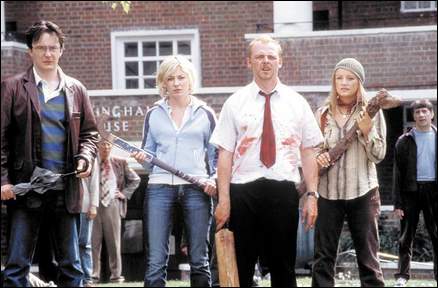
INTERVIEW: SIMON PEGG and NICK FROST ON ‘SHAUN OF THE DEAD’

By Ian Winterton
First published in CityLife magazine in April 2004

Blending those evergreen themes of cannibalism and the living dead into a tale of romance, Shaun of the Dead promises to believe life into British films. Again…

“Zombies…” says Simon Pegg. “Hmm. They’re…”

Beside him on the comfy-looking sofa is Pegg’s porky buddy, Nick Frost.

“Zombies are shit,’ he says matter-of-factly.

“Yes,” agrees Pegg. “Shit. But very scary.”

The first time I ‘meet’ Simon Pegg is at the Odeon Cinema, Leicester Square. He’s just introduced the “firstever screening anywhere” of romantic-zombie-comedy (that’s a romzomcom to you, mate) Shaun of the Dead and, while on my way to purchase popcorn, I see him in the corridor. Pale and shaking, he is a picture of abject terror.

This isn’t surprising – as co-writer and star, he has invested several years of his life to Shaun. He needn’t have worried, though – the film is, to use one of Pegg’s favourite self-invented phrases, “fried gold”.

Thursday at London’s Charlotte Street Hotel sees Pegg infinitely more relaxed. Both he and Frost exude the infectious jubilation of two guys who are having a bloody good week – feedback from the screening has been overwhelmingly positive and that bible of the movie industry, Screen International, is going to put them on the cover. The two of them are the living embodiment of a Homer Simpson ‘whoo-hooh!’

Signing Shaun posters when I walk in (“I’m going to draw a knob on this one,” Frost says), they retire to the aforementioned comfy-looking sofa.

“Zombies are shit,” says Pegg, “in that they’re not fast, but they’re scary because they’re like the nightmares where you can’t run away. Even though zombies are slow, you can sprint all you like but they’ll still catch you.”

Pegg and Frost like zombies a lot.

“We used to plan what we’d do if there was a zombie attack,” Frost tells me. “We decided we’d flee to the Isle of Wight, but every day we’d have to go on patrol because the zombies could enter the water at Portsmouth and walk along the sea bed and then stumble up onto the beach.”

For such rabid zombie fans, it was inevitable that a film like Shaun would come about. Inspired by an episode of Spaced – the surreal sitcom that earned both guys a cult following – in which Pegg’s character, Tim the slacker cartoonist, hallucinated that the zombies from the Resident Evil video game were real.

Pegg says: “Edgar [Wright, director] had so much fun with those zombies that we decided to make a feature film.”

How important was Edgar to the film?

“In many ways he is the project,” Pegg says. “I always said…”

“The owl is the pussycat?” Frost offers.

“The owl is the pussycat.” Pegg nods. “Smokey is the Bandit. I always said Edgar was the third writer on Spaced – he provided the visual side and that’s true of Shaun. Plus, we wrote it together.”

Pegg plays the titular hero, a regular bloke who finds his girlfriend trouble further complicated by a zombie plague. Accompanying him in his battle against the undead is Ed, a lardy Xbox addict played by Frost. Obviously not based on Frost himself in any way – how did he get into character?

“I’m a great believer in the Method,” Frost says in thespy tones. “First, I shaved a hole in my hair because I thought it would be funny for Ed to have this bald patch in his hair – like he’d been jackassed at a party. And [he grins, proudly] I shaved off my pubes. So instead of just acting itchy I’d actually be really itchy all the time”

Pegg shakes his head, pityingly. “He’s still shaved.”

“Yeah,”‘ Frost confirms. “I shave it once a week. I like the feel.”

He looks down at my tape recorder.

“Oh,” he says. “Bugger.”

This interview first appeared in City Life Magazine in 2004.

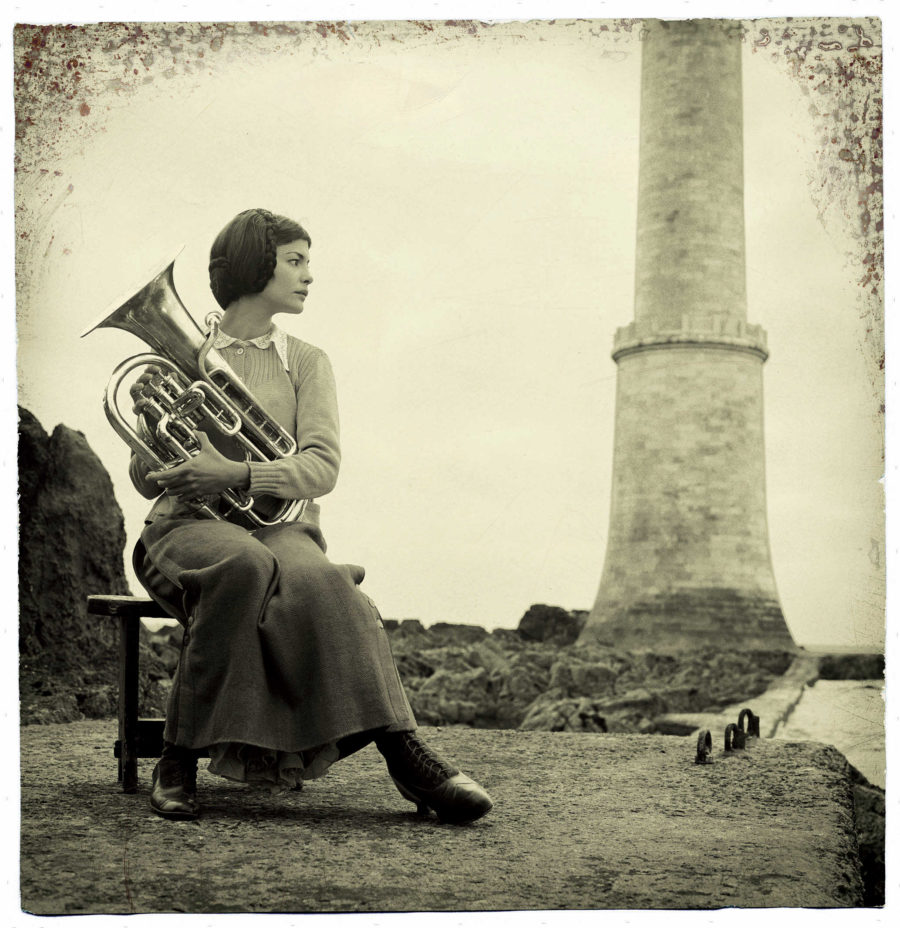
INTERVIEW: AUDREY TAUTOU and JEAN-PIERRE JEUNET ON ‘A VERY LONG ENGAGEMENT’

By Ian Winterton
First published in The North Guide magazine in 2004

As premieres in Leicester Square go, A Very Long Engagement is a low-key affair. The red carpet is decidedly short and the crowd is nothing compared to the throng that gathered the previous week for Alexander. But the people here aren’t just curious gawkers – they’re standing in the drizzle to see the exquisitely beautiful Audrey Tautou and what they lack in numbers they make up in enthusiasm.

Of course, it’s 2001’s deliciously quirky Amelie that brought Tautou to the attention of hopeless romantics everywhere. What makes A Very Long Engagement such an exciting prospect is that it reunites the elfin ingénue with director Jean-Pierre Jeunet. A heart-breaking love story set in and around World War One, it showcases both Jeunet’s peerless imagination and Tautou’s almost supernatural screen presence.

The morning after the premiere both Jeunet and Tautou are sitting in London’s swish Soho Hotel, looking healthy and happy despite staying at the post-screening party until midnight. Tautou spent most of the night catching up with her London friends whom she worked with on 2002’s Dirty Pretty Things – co-star Chiwetel Ejiofor and director Stephen Frears.

“I don’t see Chiwetal very often because he’s very busy and I’m not coming to London very often,” she purrs in a French accent that’s so sexy it’s almost clichéd. “I have very happy memories of working on that film.”

If the rapport between her and Jeunet is anything to go by, the same can safely be said of it. Although this is only their second collaboration, they both express a great admiration for one another.

“She’s the perfect actress,” says Jeunet, “because now we know she can do everything from drama to very light comedy. That’s pretty rare. She has a great sense of timing. And, of course, she’s very special with her face, like an elf.”

“We just need to look at each other on set,” says Tautou, “and we understand. We always agree about a take.”

“Yes,” agrees Jeunet. “I made one or two mistakes on Amelie and she told me and I didn’t believe her but in the editing room I saw that she was right. Now I always listen to her.”

If Jeunet made any mistakes on A Very Long Engagement, none of them are in the final cut. A unique mixture of the director’s trademark magical realism that audiences have come to know through Delicatessen, City of Lost Children and Amelie, and uncompromising scenes depicting the horror of war. In many ways it’s quite a departure for both director and actor. But, for Jeunet, the First World War has been an obsession since childhood.

“I make the same joke all the time,” he laughs, “that maybe I died during that war. Maybe it’s not a joke, I don’t know. I met a guy in San Francisco and he told me exactly the same thing. Who knows, maybe we died together in the same trench. The first time I went on the set and climbed the ladder to see the No Man’s Land it was a pretty strange feeling.”

While Jeunet immersed himself in the background of the Great War, Tautou felt that knowing too much would be a hindrance to playing Mathilde, the young woman desperately trying to find out whether her fiancé, Manech, survived the war.

“Mathilde is trying to find Manech,” she says. “She has a little idea about what happened but not much because the soldiers who are coming back don’t talk a lot about what happened. I wanted to have the same knowledge as her, so in the film you can see the mystery unfolding.”

The element of Mathilde’s character that Tautou did research in depth is the effects of her childhood polio, meaning Tautou had to limp throughout the film.

“We both met with doctors who explained the consequences of the sickness and we decided which part of the leg had been withered,” she explains. “We decided that I would wear a kind of prosthetic so that I wouldn’t forget to limp.”

Despite the subject matter of the film and the fact that she plays an entirely different person, many critics have lazily dubbed it ‘Amelie Goes To War’. She must find this frustrating?

“They’re correct,” she says, playfully sarcastic. “The actress who plays Mathilde looks pretty much the same as the one who played Amelie and the director is the same as the one who made Amelie. I think it’s fair. But,” she adds, “it’s nice to be recognised for something – only one thing is better than nothing.”

With both director and actor unafraid of being pigeonholed, is a third Jeunet-Tautou outing on the cards?

“Well,” Jeunet says, smiling cheekily Tautou, “I do keep asking her if she knows the meaning of the word trilogy. So, who knows, maybe one day?”

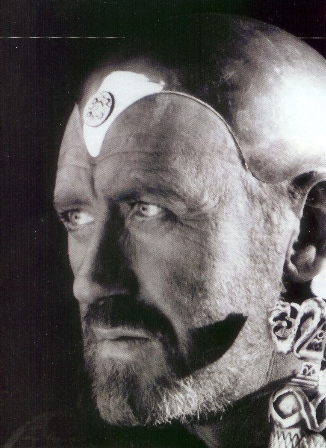
WHAT ABOUT… NICOL WILLIAMSON AS MERLIN IN EXCALIBUR?

He wore the metal skull cap and walked in the dragon’s breath. The big loony. One of Britain’s greatest actors – and biggest pains in the ass – puts the mental into Merlin

“The Dark Ages – the land was divided and without a king. Out of those lost centuries rose a legend… Of the sorcerer Merlin, of the coming of a king, of the sword of power… EXCALIBUR.”


So begins Excalibur, John Boorman’s definitive Arthurian movie. Based on Sir Thomas Malory’s romanticised version, it’s a world where shields glint, swords clash, knights wear armour even when feasting and everyone shouts. But no one shouts more loudly, or more weirdly, than Nicol Williamson’s Merlin.

We first see him striding towards us, swathed in mist, dressed in raggedy robes. His eyes, staring from beneath a steel skullcap that’s all but welded to his head, scream intelligence. And madness… a madness confirmed by the voice. A unique mix of growling, high-pitched hysteria and, best of all, inappropriate pauses, it’s the sound of “the greatest actor since Marlon Brando” (thanks John Osborne), losing a battle with his ego. And it’s awesome.

Although Boorman, fearing that famous faces would detract from the legend, cast unknowns, Williamson was the exception. Scottish born, he was one of the most celebrated Shakespearian actors of the Sixties and Seventies and was well known in the States, not least because he performed a Hamlet for that other troubled prince, Richard M Nixon.

Ironically, he was one the one actor that Boorman had to fight with the studio for. Williamson’s reputation was beyond dreadful. One story has it that, while touring Hamlet in the US, he exhibited behaviour so abominable that a fellow thesp felt obliged to apologise to the audience. Boorman, though, knew what he was doing. Williamson: brilliant, boorish, unpredictable egomaniac. Remind you of anyone?

“I have walked my way since the beginning of time. Sometimes I give, sometimes I take – it is mine to know which and where.”

Aided by his second sight, Merlin has meddled in the affairs of men for centuries, though with what success is debatable. Having decided that Uther Pendragon is destined to reunite the kingdom, Merlin gifts him Excalibur. This does the trick but, at the celebratory banquet, Uther starts to covet Lord Cornwall’s missus and war is back on the menu before they’ve even had dessert. Merlin then employs the magical equivalent of Rohypnol, enabling the horny king to bed Mrs Cornwall. His one proviso: “What issues from your lust shall be mine.” Luckily for Merlin, he doesn’t just get a beaker of baby-batter, but Arthur.

Merlin takes instantly to Arthur, perhaps because he’s one of the few mortals to confound his clairvoyance. When the king hands Excalibur to rebellious baron, Uryens, telling him to knight him or kill him, Merlin delightedly murmurs, “I never saw this.”

One thing Merlin fortells only too well is the king’s accursed love life. “You have a land to quell before you start this hair pulling and jumping about,” he chides when Arthur speaks of his love for Guinevere. Arthur isn’t listening and, like Uther, asks Merlin to make her love him. Merlin explodes.

“I once stood exposed to the dragon’s breath so a man could lie one night with a woman. It took me nine moons to recover and all for this lunacy called love, this mad distemper that strikes down both beggar and king. Never again!”

Merlin himself isn’t immune to love, though. Between him and Helen Mirren’s Morgana, there exists a simmering frisson of attraction and loathing. “Perhaps,” she taunts, “you ache for what you’ve never known.”

That this love-hate relationship is so convincing is due to the fact that Mirren and Williamson, former lovers, detested one another. To both actors’ irritation, Boorman put the two together so he could tap into their “awkward friction”.

Excalibur’s parallels with Williamson’s life run deeper than that. Just as the film shows Merlin’s last days, it also marks the high point of Williamson’s fame. While his ‘unknown’ co-stars – Patrick Stewart, Gabriel Byrne, Liam Neeson – have become household names, Williamson hasn’t acted for years. “There are other worlds,” Merlin muses. “This one is done with me.” For Williamson, this translates as retirement on a Greek island.

He may have been one of the 20th century’s best Hamlets, but it’s as Merlin he’ll be remembered by most. Fittingly, his last screen role was Cogliostro in Spawn, a man later revealed in the comicbooks to be, yes, Merlin.

“He’s in our dreams now,” Arthur says. “He speaks to us from there.”

Or, in a sentiment no doubt echoed Williamson’s former colleagues, as Merlin himself puts it:

“A dream to some – a NIGHTMARE to others!”